
Charlotte Directory Collections
Charlotte Mecklenburg Library's Robinson-Spangler Carolina Room is the local starting point for historical directories. The surviving references identify individual Charlotte volumes for 1875, 1879-1880, 1889, and 1889-90, plus a Hubbell Collection reference run for 1897-1989. Those dates describe known holdings, not a promise that every annual volume survives. The catalog and reference staff are the right check for a particular year, publisher, or condition question. CMStory also preserves scanned directory material, while the library's broader archive adds maps, yearbooks, newspapers, government documents, family manuscripts, and photographs.
| Collection | Years noted locally | Where held | How to use it |
|---|---|---|---|
| Charlotte directory volumes | 1875; 1879-1880; 1889; 1889-90 | Carolina Room and CMStory material | Ask for the volume, then retain its year and page. |
| Hubbell Collection reference run | 1897-1989 | Carolina Room reference collection | Confirm the exact volume and publisher in the catalog. |
| Historic scanned pages | Selected historic issues | CMStory digital material | Read the scan against its original page, not an OCR excerpt. |
| Maps, yearbooks, and family files | Varies by collection | Carolina Room and related archives | Use as dated companion evidence, not a replacement for the directory. |
There is no verified digitized reverse or criss-cross directory for Charlotte in the official material reviewed. For an address-first question, combine forward volumes with deed, tax, GIS, permit, newspaper, and map records instead of assuming an address index exists.
Carolina Room Directory Access
The Carolina Room provides both a physical research setting and a reference route for questions that a web search cannot settle. Its listed service hours are Monday through Friday, 9 a.m. to 5 p.m. Reference staff can be reached at carolineroom@cmlibrary.org or 704-416-0150. Email copies are limited, and an appointment or on-site access can apply. That matters when a directory is only available in the room, when a citation needs a page check, or when a nearby map and newspaper reel will help test the same address.
The Carolina Room archives and special collections service shows the library setting behind this research.
The archive view is a reminder that a directory entry is strongest when the researcher records its original year, page, and collection alongside it.
The free Vault digital collections portal expands the remote starting point. Some library databases and the Charlotte Observer archive depend on a library card or subscription, while Ancestry Library Edition and FamilySearch Affiliate access are generally in-library. Treat access as collection-specific and verify it before making a special trip.
Charlotte Directory Pages at CMStory
CMStory gives researchers a direct way to inspect historic directory scans rather than relying only on a modern transcription. The scan record for the 1879-1880 volume is especially useful for checking spelling, street abbreviations, and the surrounding names that can be lost in a search result. It also preserves the book's own layout. When a name is common, read the full line and nearby entries before deciding that a result belongs to the same person.
The 1879-1880 Charlotte directory scan is one of the digitized collection paths.
The scan supports a careful page-level citation, which is more useful than an unverified name-only match.
CMStory also holds other historic directory pages. These digitized pieces do not establish a complete online run, so a silent year should be treated as a collection question for the Carolina Room rather than proof that no book was printed.
Reading a Charlotte Directory
A Charlotte directory entry is a compact annual snapshot. It can show a name, a spouse or relationship clue, a widow notation, an occupation or employer, a street, and a shortened residence or boarding notation. The exact fields vary by volume. Initials, abbreviated streets, omitted people, and historical classifications all require care. Preserve historical wording when it is needed to identify the source, but do not turn an old label into a modern identity claim.
| Name line | May use initials, a surname, or a relationship notation rather than a full modern-style name. |
|---|---|
| Relationship clue | A spouse reference or “wid of” can be a lead for newspaper, probate, or vital-record checking. |
| Occupation or employer | Can distinguish similar names, but it is a dated directory detail rather than identity proof. |
| Street line | May use a number, street abbreviation, corner shorthand, or residence notation. |
| Boarding notation | “Bds” can signal boarding or lodging and does not, by itself, establish a family relationship. |
- Criss-cross directory
- An address-ordered directory section. No verified digitized Charlotte reverse run was found, so use it only when a specific physical volume is confirmed.
- Householder index
- An index arranged around the named person or household, often useful for locating the full entry before comparing nearby names.
- Abbreviation key
- The volume's explanation of shortened words and marks. Photograph or transcribe it before expanding a notation on your own.
The historic Charlotte directory page shows why the original print context matters.
Reading the page as printed helps separate a line's abbreviations, address, and relationship notes from assumptions made later.
Charlotte's 1904 Directory Clue
CMStory notes that the 1904 Charlotte directory was the first to list automobiles. That small feature can narrow a search around garages, dealers, chauffeurs, or a changed occupation in the surrounding annual volumes. It does not prove that an automobile was absent before 1904, nor does it identify a particular owner without the original entry and corroborating sources. It is a practical way to choose which years deserve a closer look when a family story includes early motoring.
Charlotte's wider address history also reflects gold, rail, mill, banking, and wartime eras. Those forces may explain why a business district or street changed. They do not prove a relationship between people with similar names. Keep the directory year and the historical context on separate lines in research notes.
Charlotte Newspapers Beside Directories
Newspapers can add dates and events to a directory lead. The library lists Charlotte Observer image coverage for 1886-1984, text coverage from 1985 forward, image coverage from 2018 forward, and web articles from 2007 forward. Carolina Room microfilm has a different set of runs, including the Observer from 1892 to the present, Charlotte News from 1888-1985, Charlotte Chronicle from 1886-1892, Charlotte Democrat from 1881-1897, and Charlotte Free Press from 1872-1897. No one run is complete.
The CMStory newspaper collections describe the local microfilm holdings.
A directory can place a name near an address, while a dated notice or obituary can help test a move, death, business event, or spelling variant.
Search by name, street, neighborhood, school, church, organization, or event. OCR can miss initials, punctuation, and older type. Save the title, date, page, and the image or reel reference. A missing hit can reflect OCR or a gap in the run, not the absence of an event.
Charlotte Directories and Sanborn Maps
A directory gives a name or street line. A Sanborn map adds the physical setting. Charlotte is included in the library's Sanborn map collection for 1867-1970. The maps can show building outlines, size, use, material, street and sidewalk widths, property boundaries, block numbers, railroads, and other features. They do not identify everyone who lived at an address, but they can explain why a directory's corner reference or street number no longer fits a current parcel.
Library digital access may require a card. The Library of Congress Charlotte Sanborn example covers a 1929 to February 1951 volume with 59 sheets. Editions commonly arrive about five to ten years apart, so a gap between them does not prove that a building did not exist. Match the sheet date to the directory year before drawing a conclusion.
Tracing Families with Charlotte Directories
Use annual volumes to make a dated household trail, not a single-name claim. Start with the earliest confirmed entry, preserve the spelling as printed, and work forward one available year at a time. Record each address, relationship clue, occupation detail, and page. Pair the directory years with federal census years to test whether the same household appears in the same place or whether a move, death, or boarding situation better explains the change. The archive collections are described in more detail on the Charlotte previous residents page when the question is one address over time.
- Find the first confirmed name entry and write down the volume year and page before interpreting it.
- Check later available volumes for the same name, initials, spouse clue, street variant, and employer wording.
- Compare a move with the nearest census, newspaper notice, map edition, deed, or probate record that fits the date.
- Use a widow notation or a missing entry as a lead for further records, not as a conclusion about a death or departure.
- Label each connection as direct, probable, or a historical lead until independent evidence supports it.
People can disappear from a volume because they moved, died, were omitted, used an initial, boarded elsewhere, or fell inside a gap in the collection. A newspaper, cemetery inquiry, probate file, or county archive record can narrow the possibilities. No single entry resolves them all.
Research note. Keep the directory title, year, page, spellings searched, and confidence label together so a later reader can repeat the check.
Charlotte Directory Context in Numbers
Local population context can help explain why later books look denser than early ones. CMStory lists Charlotte at 1,065 people in 1850, 7,094 in 1880, 18,091 in 1900, 82,675 in 1930, and 201,564 in 1960. These are historical city figures with gaps in the cited display, so they should not be used to invent values for missing decades. They provide context for the scale of a directory, not a count of its entries.
The Mecklenburg Historical Society is another local-history and genealogy referral point.
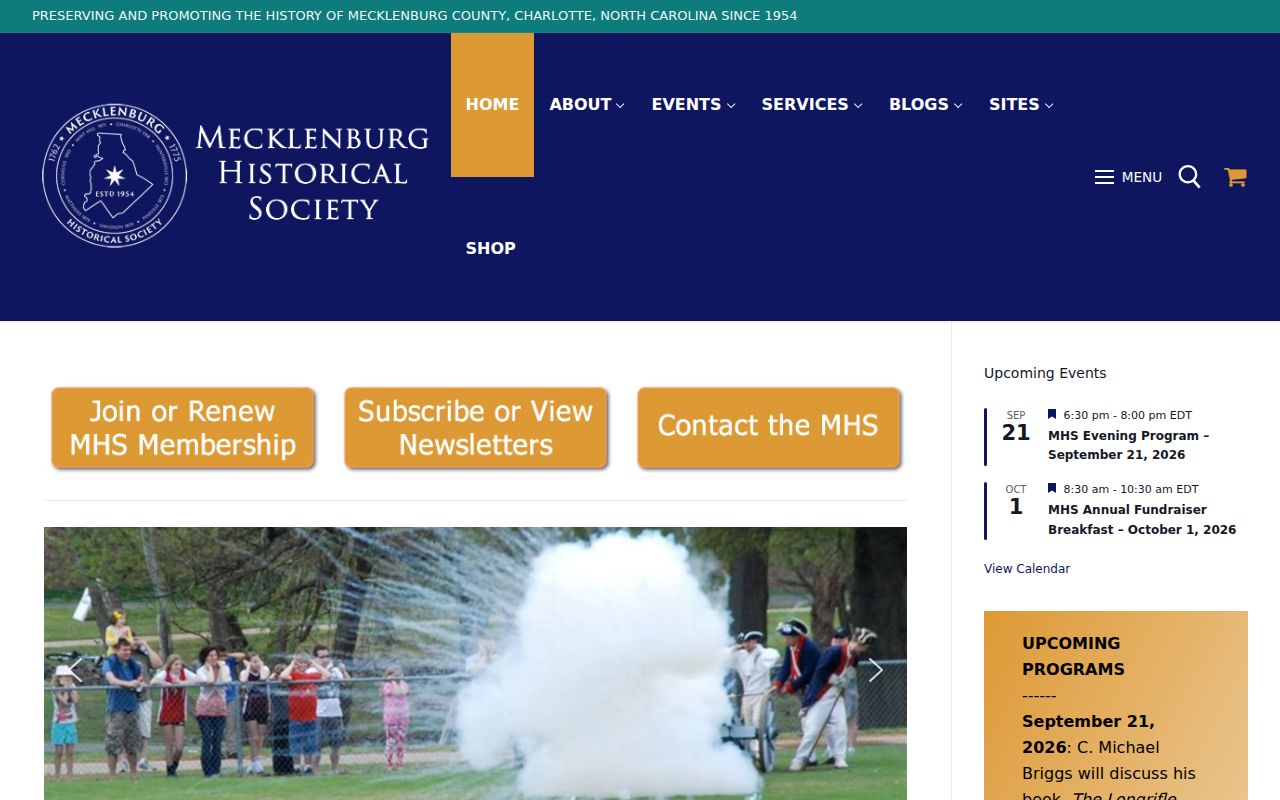
Its local-history referral role is useful when a directory citation needs to be paired with family, neighborhood, or Mecklenburg County context.
For older court, land, estate, tax, and naturalization material, the North Carolina State Archives Mecklenburg box lists are a starting point. FamilySearch also lists North Carolina probate, deeds, estate files, and civil actions, though account, affiliate, or on-site access can vary. The box list is a finding aid, not a complete name index.