
Finding Charlotte Residents Through Records
Charlotte has no single public household roll. The useful trail depends on whether the starting point is a person, a parcel, or an earlier address. The Mecklenburg County property and tax tools are strong for a current owner and the parcel tied to a street address. The state voter lookup supplies election-registration context. The Register of Deeds ties names to recorded land instruments, while the Carolina Room preserves the older directory and newspaper trail.
Each source answers a narrow question. A tax account can identify an owner or mailing contact, but a mailing line can belong to an estate, lender, manager, or remote owner. A voter result is not proof of title or continuous occupancy. Directory and newspaper hits are dated historical leads. Keeping those roles separate makes a Charlotte residents directory search more useful and less likely to join facts from different people with the same name.
The POLARIS public parcel search is one official starting point for the address side of a Charlotte residents directory search.
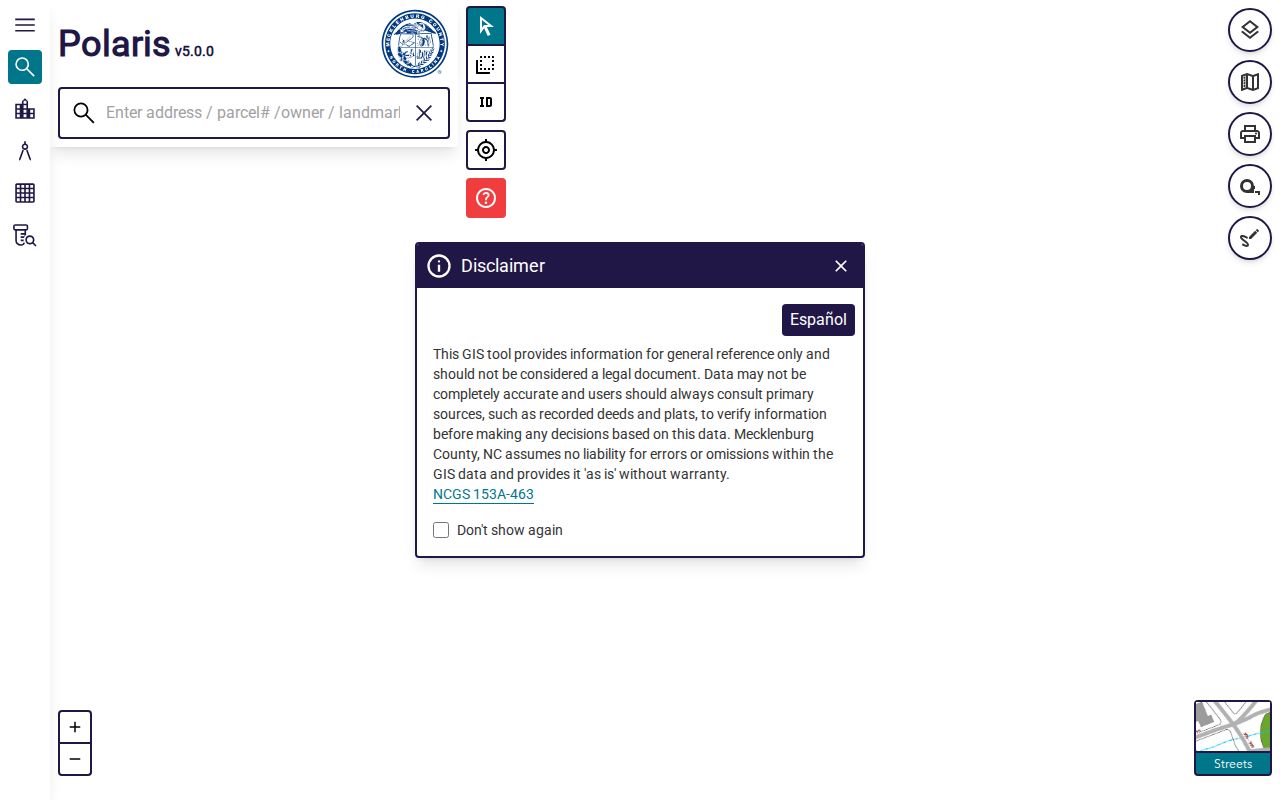
Its search screen illustrates why the address, parcel, and owner paths should be treated as separate ways into the same local record system.
- Check an address or owner in Mecklenburg Tax Administration and POLARIS, then note the parcel and legal-description context.
- Use the North Carolina voter lookup for the public election fields shown by the state, not as a general household list.
- Search the Register of Deeds by role and date, using the modern or historical index that matches the transaction period.
- For an earlier household, ask the Carolina Room for the relevant directory year, map, newspaper, or family-history source.
- When an existing non-exempt record is not online, send a focused request to the agency that keeps it, with an address, parcel, case number, or date range.
Charlotte Residents Records Offices
Resident research in Charlotte passes through custodians with different responsibilities. The Register of Deeds keeps recorded land instruments and selected vital-record services. Tax Administration and GIS maintain parcel, billing, and address context. The Mecklenburg Board of Elections handles local voter services, while the statewide lookup presents the public election-facing fields. Courts, city departments, the state vital-record office, and the library are separate channels when the question changes.
Use the office that created the record. The Charlotte street directory has the full address-first chain. For a general current or historical search, these are the primary desks to bookmark.
Mecklenburg Register of Deeds
720 E. 4th St.
Charlotte, NC 28202
704-336-2443
Deed and records services
Mecklenburg Tax and GIS
2145 Suttle Ave.
Charlotte, NC 28208
980-314-4603
Tax Administration search
Mecklenburg Board of Elections
741 Kenilworth Ave., Suite 202
Charlotte, NC 28204
704-336-2133
Local elections services
Charlotte Residents Directory Parcel Trail
POLARIS is Mecklenburg County's public map interface for a Main Search, Situs Address Search, owner, parcel, landmark, preliminary-plan, engineering-grid, and property-analysis work. It joins a site address to parcel geometry and county data. Its companion GeoPortal adds map layers for ownership, voting, schools, parks, libraries, waste, environmental features, and districts. That makes the map a useful starting point, not proof that every displayed owner is the person currently living there.
The county's CAMA and GIS materials describe transaction-dependent processing lags. A recent instrument can appear in the deed index before the map or tax display catches up. If records conflict, save the source date and compare the grantor, grantee, parcel, situs address, and mailing address before reaching a conclusion.
| POLARIS search | Best use | Read with care |
|---|---|---|
| Situs address | Locate a property on the map | Address format and unit details matter |
| Parcel or PIN | Connect map, tax, and recorded-land context | A parcel is not a household roster |
| Owner or landmark | Find a starting record when an address is incomplete | Name and landmark results need corroboration |
Note: The county describes its map data as current working information, so record the date before comparing it with a deed or tax change.
Charlotte Deed Index Dates Matter
The Mecklenburg County Register of Deeds divides its real-estate research between two official systems. The modern index at the current records search covers documents added from March 1990 forward. The historical index and images at the historical records search reach from 1763 through February 1990. A recorded deed can reveal parties, dates, instrument references, plats, and a legal description. It shows a transaction role, not necessarily where either party lived.
A backward chain begins with the current grantee, reads the purchase instrument for the prior grantor, and then searches that grantor as a prior grantee. The Register of Deeds also offers its public-search vault at 720 East Fourth Street, Monday through Friday from 8:30 a.m. to 4:30 p.m., and copy routes when a web image is not enough.
The Register of Deeds service page lists the local record categories and access routes behind that index.
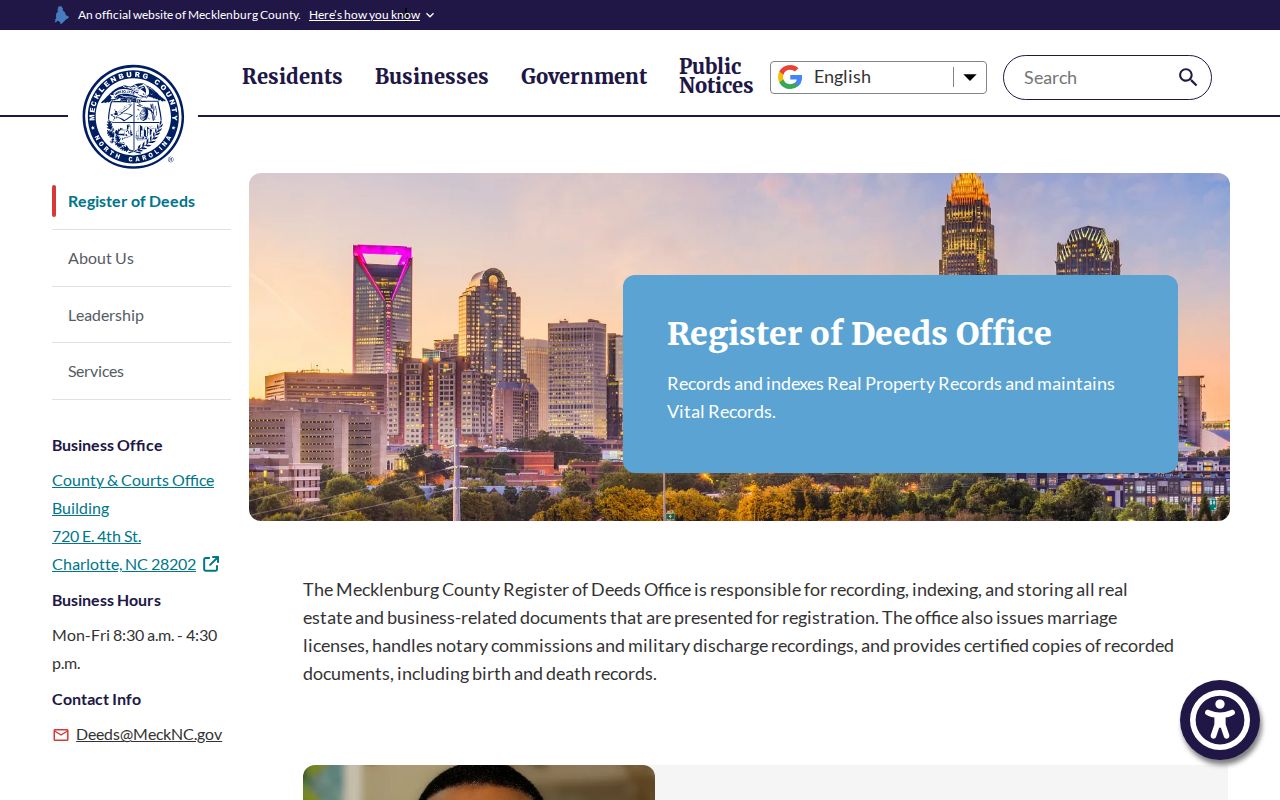
The service view is a reminder to choose the record category before requesting a copy or relying on a search hit.
Current Charlotte Resident Directories
Current directories are really several narrower official or civic sources. Property records identify legal owners and tax contacts. The voter tool reports public election information. Deed indexes identify parties in recorded instruments. The City Neighborhood Organization Directory offers public civic-group contacts and self-described boundaries, not a membership list. Use the source that fits the question, then treat a hit as a record-specific fact rather than a claim about an entire household.
| Charlotte source | What it can establish | Custodian | Access route |
|---|---|---|---|
| Property and tax records | Parcel owner, situs, mailing, billing context | Tax Administration | Free county tools |
| Voter lookup | Displayed registration and election context | NCSBE / Mecklenburg BOE | Public name search |
| Deed indexes | Grantor, grantee, recording trail | Register of Deeds | Modern and historical indexes |
| Neighborhood directory | Public civic contacts and group context | City of Charlotte | Directory and organization pages |
| City directories and newspapers | Dated household or address clues | Carolina Room | Library and archive access |
Names need more than one match. The Charlotte resident lookup route explains how to compare a name, a parcel, a case, an entity role, and a historical record without treating any one field as a final identification.
Charlotte Resident Roll Search Fields
North Carolina's voter lookup uses a defined form. First and last name are required. Middle initial, year of birth, county, and status choices can narrow a search. A displayed response may include public registration status, jurisdictions, polling place, sample-ballot information, absentee context, and voter history. The state updates registration files weekly and publishes a ten-year history file.
| Voter lookup field | Form type | Use |
|---|---|---|
| First name | Text | Required name input |
| Middle initial | Text | Optional disambiguator |
| Last name | Text | Required name input |
| Year of birth | Dropdown | Optional form control, never publish full DOB |
| County and status | Dropdown and choices | Limit the result to Mecklenburg and selected status |
Full or partial Social Security numbers, date of birth, driver-license information, ballots, cast-vote records, some signatures, and protected addresses are restricted. A precinct change can result from redistricting instead of a move.
The North Carolina voter lookup is the state-controlled public search interface.
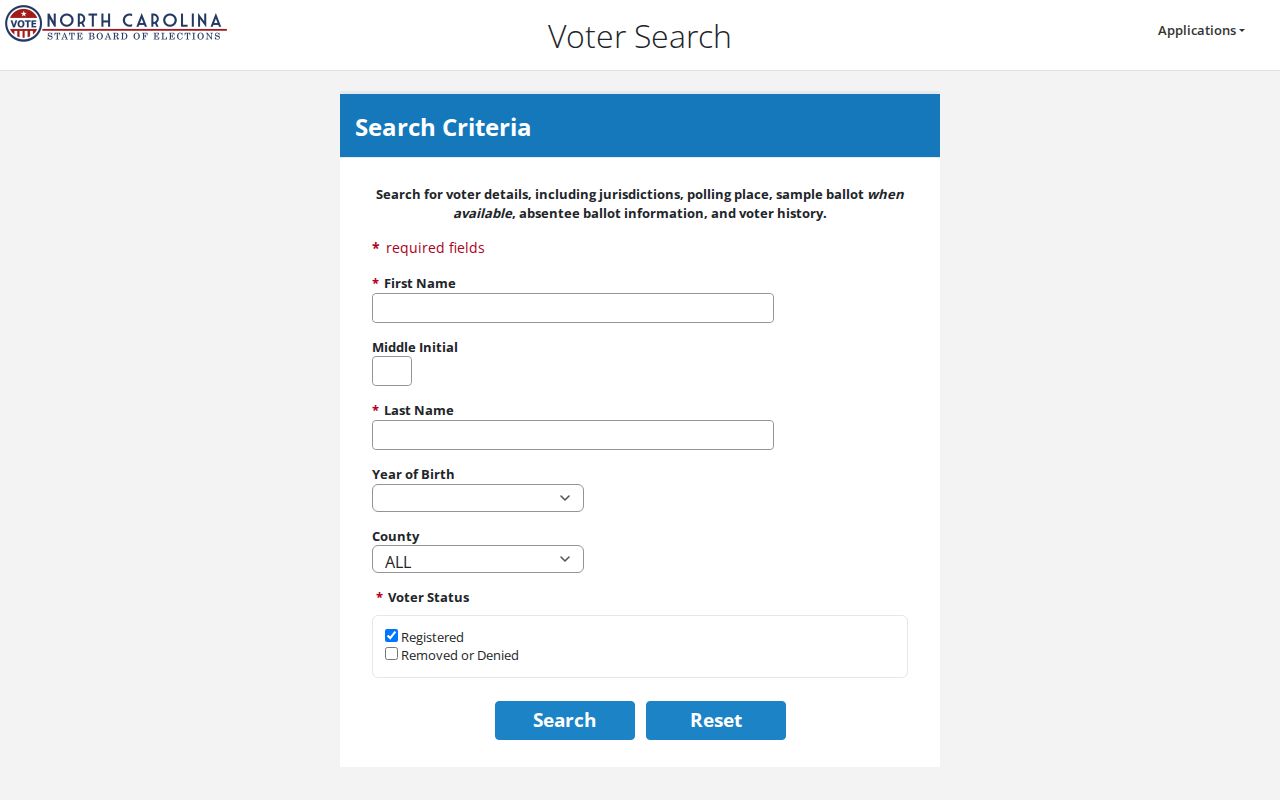
The form reinforces that this is a name-and-status search for election context, not a public street-by-street household file.
Charlotte Resident Records Beyond a Search
The NC eCourts Portal supports public county, party, case-number, category, action, and document searches. Mecklenburg's older documents can require a focused Clerk request or a public-terminal visit. A court result documents participation in a case, not a current address or final outcome. Ask for an existing document or docket entry with the court, category, filing range, exact party spelling, and known file number.
The Mecklenburg request portal and Charlotte request route can help when a named custodian has an existing non-exempt record outside a portal. Chapter 132 allows inspection and copies subject to exemptions and redaction, but it does not require staff to create a new list or answer a broad research question.
The Mecklenburg Sheriff inmate search is a different, short-window custody system.
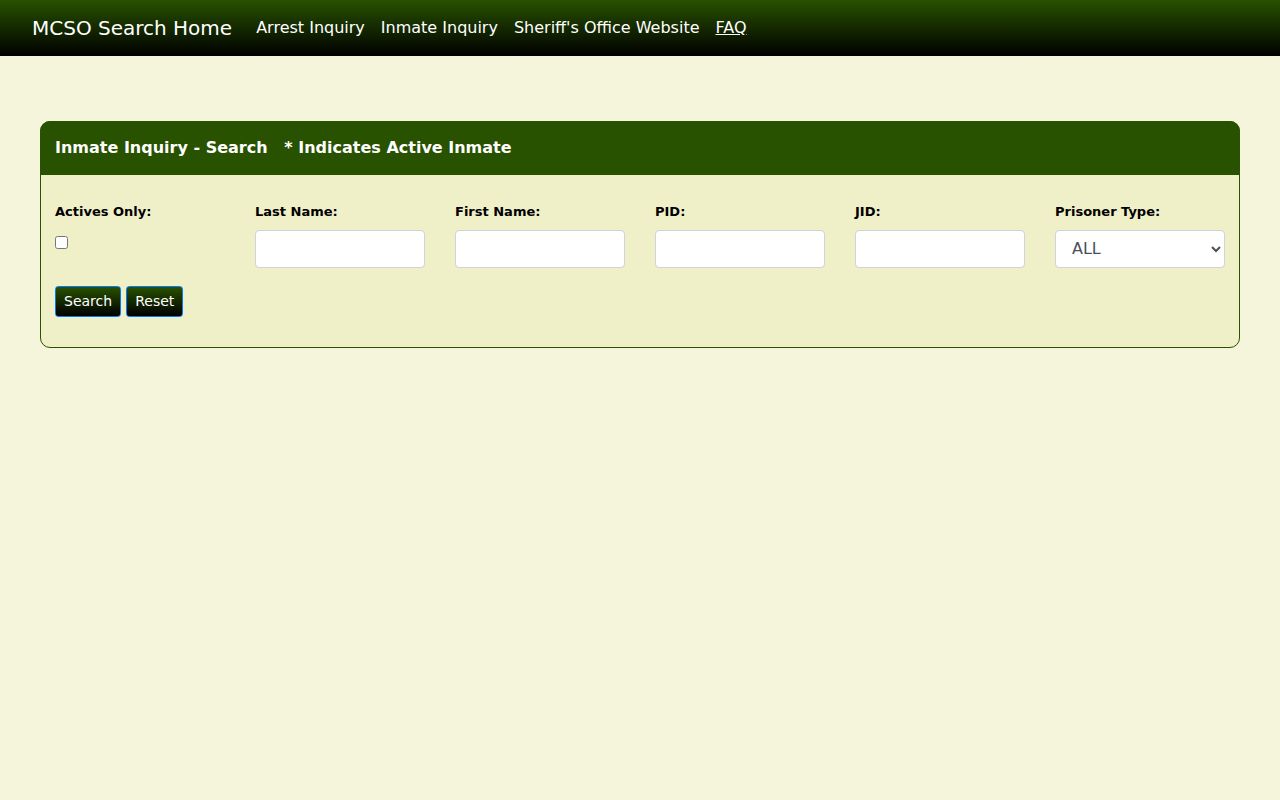
Its approximate three-year custody view must not be treated as a complete court history or as a way to establish a person's identity.
Lawful personal use. Public records can help with family history, civic questions, estate research, and scam checks. Do not use them to stalk, harass, intimidate, or harm a person.
Charlotte Residents Directory Record Terms
Local tools reuse record words that are easy to mistake for one another. A few plain definitions help keep a search narrow and let the reader ask a custodian for the right document.
- Parcel
- A mapped piece of real property, often identified by a PIN or parcel number.
- Situs address
- The physical location attached to a parcel, which can differ from the owner’s mailing address.
- Index
- A search aid pointing to a record, not always the underlying image or certified copy.
- Roll
- A list maintained for a specific public function, such as tax administration or voter registration.
- Criss-cross directory
- An address-oriented directory format; no verified digitized Charlotte run was located in the researched collections.
Charlotte Official Records Versus Search Listings
Official systems name their source, date, jurisdiction, and record type. That makes it possible to decide what a result can show and when it was current. Commercial lookup categories may be convenient, but their identity matching, update timing, and underlying source coverage are not a substitute for an official record. For a meaningful question, go back to the custodian and preserve the key, such as a parcel number, case number, NCID, or recorded instrument number.
| Official source | Useful strength | Limit to remember |
|---|---|---|
| County parcel tools | Direct property and map context | Owner does not always mean occupant |
| State voter lookup | Public election status and district context | Protected fields and addresses are withheld |
| ROD index | Recorded transaction history | Party role is not a residency finding |
Charlotte Resident Records Beyond Land
NC Vital Records lists statewide coverage beginning in 1913 for births, 1930 for deaths, 1962 for marriages, and 1958 for divorces. Certified copies have relationship or authorized-purpose rules under North Carolina General Statutes 130A-93 and 130A-99. A public obituary or historical index does not create an entitlement to a certificate. The county Register of Deeds, the Clerk where a divorce was filed, the state office, and older archives each have different roles.
The NC Vital Records ordering page is the official place to review the current state process and coverage.
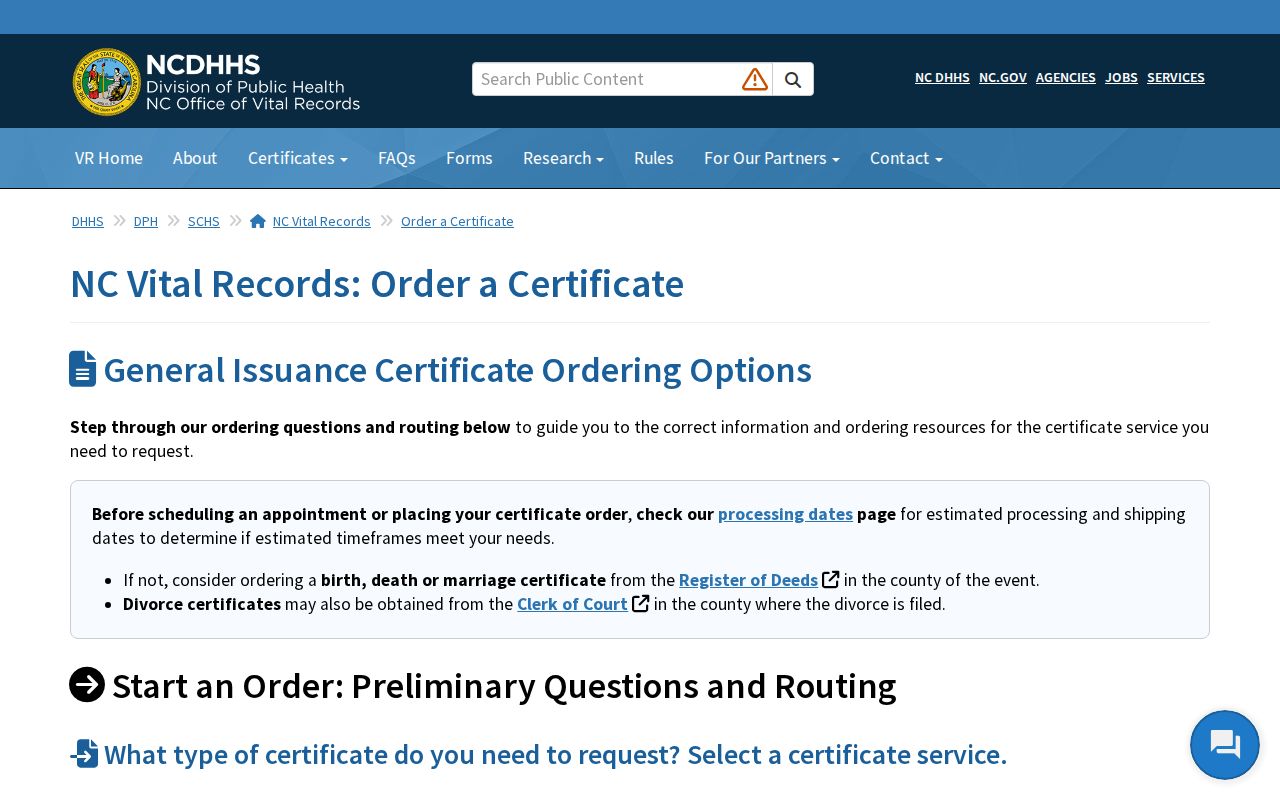
Its ordering route does not remove the relationship and authorization restrictions attached to certified copies.
For a historical trail, the Robinson-Spangler Carolina Room has directories, newspapers, yearbooks, maps, family files, and local manuscripts. The library's Vault, CMStory, Sanborn resources, State Archives finding aids, and FamilySearch collections offer more routes, sometimes with card, account, affiliate, appointment, or on-site limits. Save the collection name, year, page or image, and access date with every historical lead.
Charlotte Resident Records Need Privacy Checks
North Carolina law opens many public records but also protects sensitive data. General Statutes 132-1.10 provides a written redaction process for defined identifiers in Register of Deeds and court records. General Statute 132-1.1 and Chapter 15C protect actual addresses and phone numbers for Address Confidentiality Program participants. Voter, vital, juvenile, sealed court, victim, medical, and alarm information have additional limits.
Keep only the fact needed for the task. Do not republish a protected location, full date of birth, signature, identifier, or sensitive case information. When a legitimate record is missing, common explanations include a coverage cutoff, a spelling variant, a processing lag, a restricted record, or material that has not been digitized.
The Federal Bureau of Prisons locator is another distinct, federal custody source.
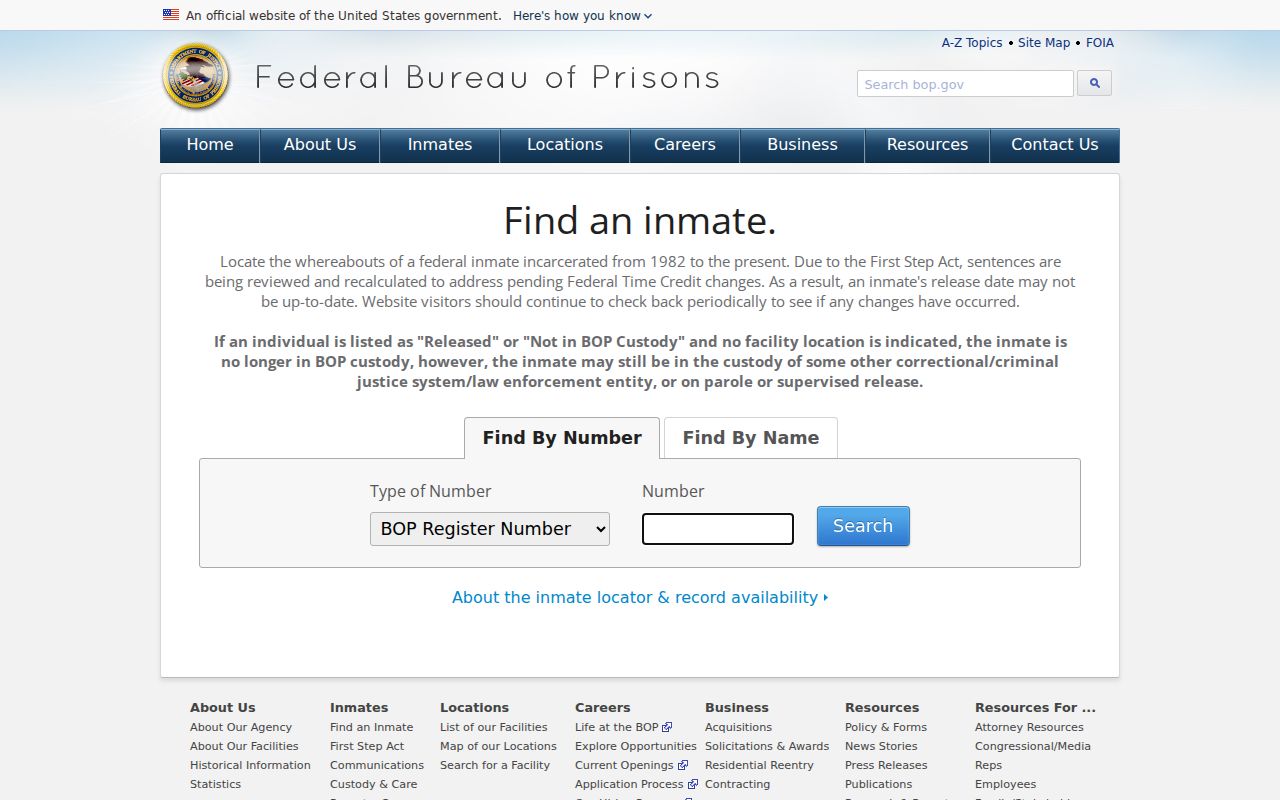
Its separate interface underscores why custody, court, parcel, and historical records need their own jurisdiction and identity checks.
Historical Charlotte Resident Directories
Charlotte city-directory holdings include 1875, 1879-1880, 1889, 1889-1890, and a cited 1897-1989 Hubbell Collection run. A directory entry may give an address, occupation, employer, spouse or widow notation, boarder notation, or business clue. It is an annual snapshot, and initials, abbreviations, omissions, or historical source language need careful reading.
The Carolina Room offers reference help Monday through Friday, 9 a.m. to 5 p.m., at 704-416-0150 or carolineroom@cmlibrary.org. The Charlotte city directory collections explain the shelf, dated entries, newspapers, maps, and household tracing in depth. The city’s 1904 directory is noted as the first to list automobiles, a small clue that can help date an occupation or business search.
The Mecklenburg tax and property search can pair a historical address clue with present parcel context.
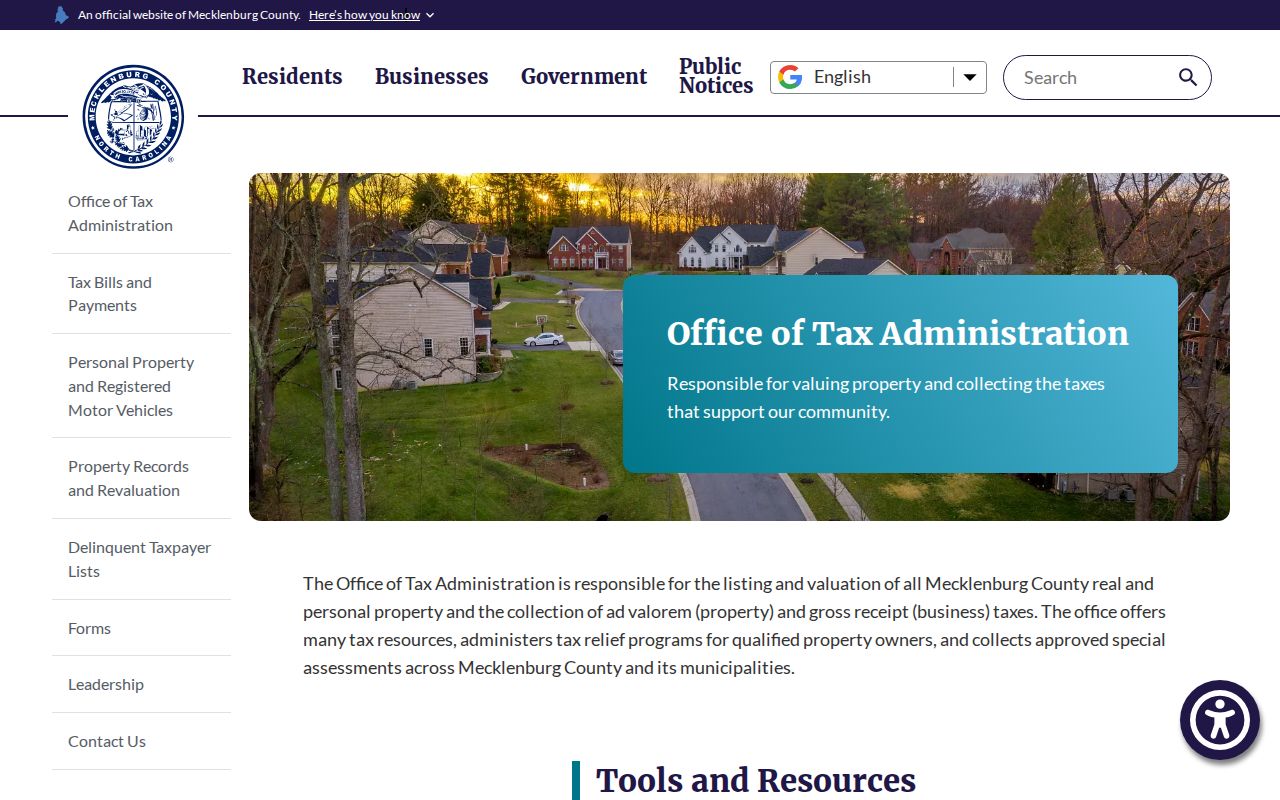
Tax fields can identify current billing and parcel context, but they should be read with the ownership, mailing-address, and date cautions used for all records.