
Finding Charlotte Street Evidence
A street search in Charlotte can establish several different things, but each source answers a narrower question. Tax Administration and POLARIS connect a street address to a parcel, owner name, mailing line, legal description, PIN, value context, and map layers. The Register of Deeds supplies the recorded instrument trail. Election records may provide registration context for one known person. None of those sources alone proves that a person currently lives at the address. A tax mailing line can point to an estate, manager, lender, attorney, or another address.
Keep the address spelling, unit, postal city, jurisdiction, PIN, and the date of each result together. A parcel number is especially useful when street names are abbreviated or an old directory uses a different form. The practical chain is: validated address to parcel and PIN, parcel to recorded grantee, then grantee and legal description to earlier instruments. Treat every name as a role in a record, not as a conclusion about present occupancy.
- Validate the street number, directional form, street type, unit, postal city, ZIP, and jurisdiction with Address Management and USPS.
- Search Tax Administration and POLARIS by address, parcel, owner, or street to capture the situs address and PIN.
- Use the current grantee, instrument number, book and page, or legal description to search the Register of Deeds index.
- Read the purchase deed, then search the prior grantor as a former grantee to trace the ownership chain backward.
- For a known individual, use the one-person voter lookup only for public election context, and preserve the source date and privacy limits.
Note: A recorded deed may appear before the county map or ownership display refreshes, so instrument dates and map metadata matter.
Charlotte Street Validation
Mecklenburg Address Management keeps situs addresses and road centerlines for Charlotte, county jurisdictions, towns, and unincorporated areas. Its records include long and short street names, address ranges, ZIP, postal city, jurisdiction, ETJ, fire district, and special tax-district attributes. Those fields make it the local check when an address looks incomplete or a street crosses more than one jurisdiction. Assigned addresses also support emergency response and permit filing.
Use the USPS ZIP Lookup to confirm the deliverable mailing line after checking the local address data. USPS has By Address, By City and State, and Cities by ZIP modes. A postal city is a mailing label, not a municipal boundary. A Charlotte postal line therefore does not establish that an address is inside Charlotte city limits, and it does not confirm a person or company at that address.
Address-first check. Compare the local jurisdiction field with the USPS result before selecting a city or county custodian. This avoids sending a permit or records question to the wrong office.
Charlotte Street Directory Tax Search
The Mecklenburg County Office of Tax Administration is the first property roll to try for an address-based question. Its public search accepts Bill Number, Business Name, Owner Name, Parcel Number, and Street Name. A street-name search can identify tax records associated with the street, but it should be narrowed by number, PIN, and map context before any conclusion is drawn. Tax and CAMA fields supply ownership and billing context, rather than a verified list of occupants.
| Tax search field | Use on a street search | What it helps match |
|---|---|---|
| Bill Number | Open a known tax bill | Billing record context |
| Business Name | Check a named entity role | Business-linked tax account |
| Owner Name | Refine an address or parcel result | Owner name shown by the roll |
| Parcel Number | Use the most precise property key | PIN and map connection |
| Street Name | Begin a street-level review | Address-indexed tax records |
Use the official Tax Administration bill search to see the local fields before searching. Its results should be compared with the deed image and parcel map, because the tax source, cadastral map, and recorded instrument can update on different schedules.
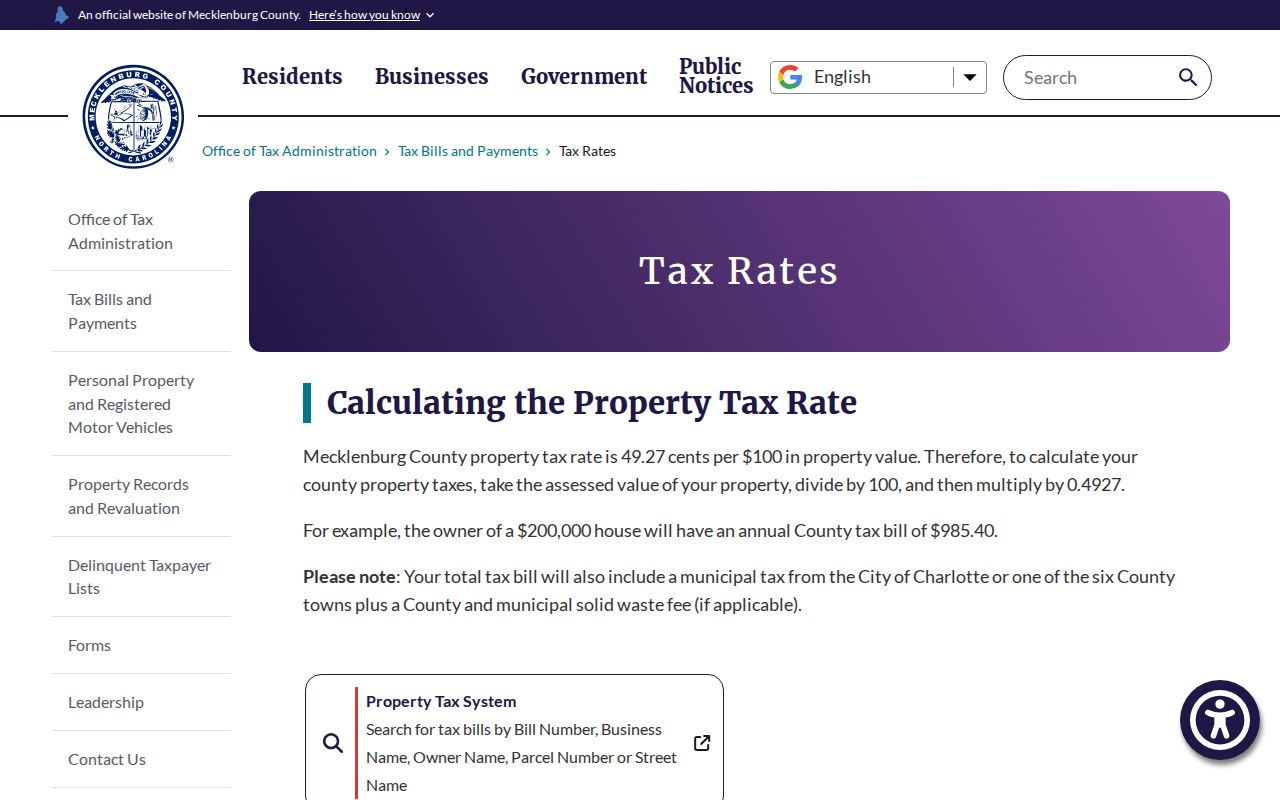
The tax search controls show why a parcel number or owner name is stronger than a broad street-only result when several records share one road name.
Charlotte Street Map Layers
POLARIS accepts an address, parcel, owner, or landmark and offers Main Search, Situs Address Search, Preliminary Plan Search, Engineering Grid Search, and Property Analysis. Its property context can include owner names, situs and mailing addresses, legal description, parcel or PIN, map location, and overlays. The county’s parcel mapping is cadastral, meaning it is tied to legally recorded land descriptions rather than a general street listing.
Mecklenburg GeoPortal adds layers for schools, waste services, ownership, environment, voting, districts, parks, and libraries. These layers help locate the correct parcel and describe public geographic context. They do not establish a household roster. GIS processing can lag a newly recorded deed, so an instrument date and source timestamp should travel with any map finding.
The official Mecklenburg GeoPortal is the source for the map interface shown here.
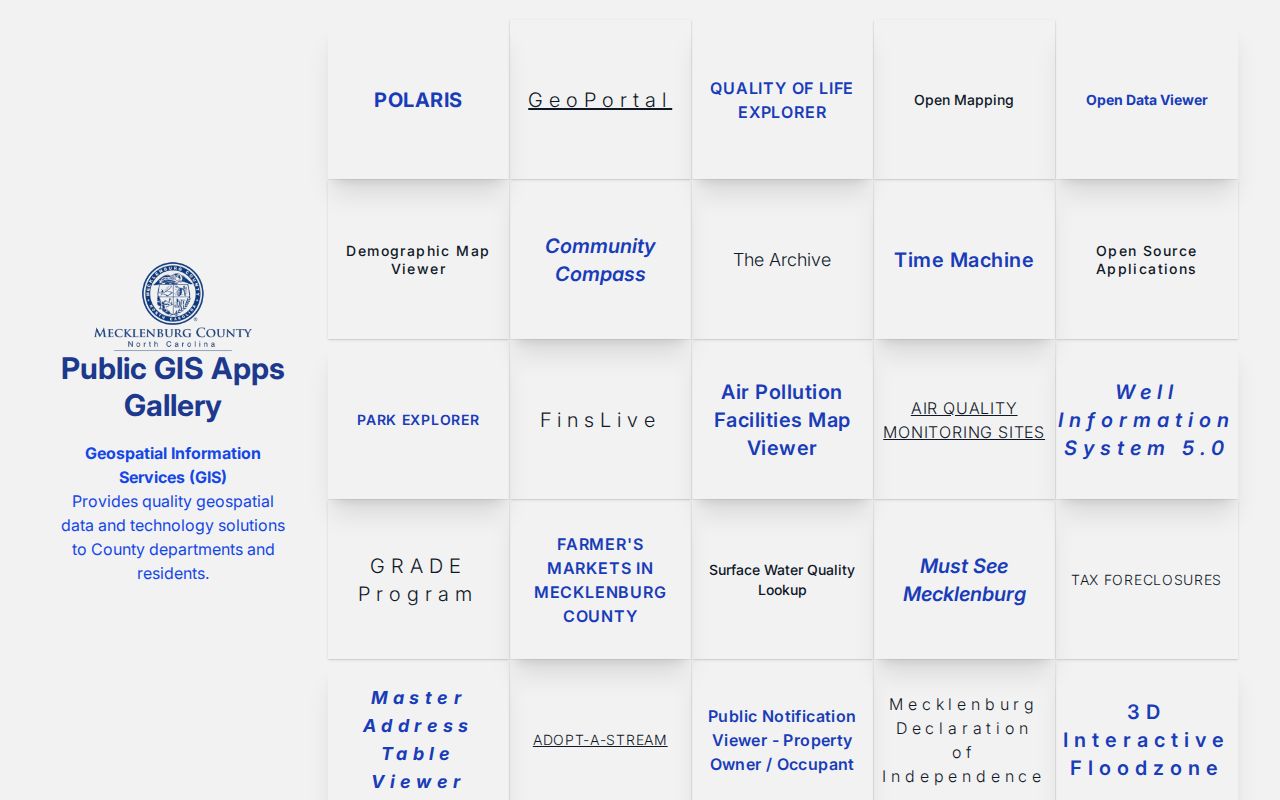
Use Identify and the parcel outline to confirm a record, then compare the resulting PIN and situs fields rather than relying on a nearby map label.
Charlotte Street Deed Chain
For instruments added from March 1990 to the present, start with the official modern Register of Deeds index. Search the current grantee, read the deed that brought the parcel into that name, and identify the prior grantor. Search that prior grantor as a grantee, then continue through instrument number, book and page, plat reference, and legal description. A deed of trust, assignment, satisfaction, correction deed, easement, covenant, or plat may explain a parcel relationship, but it has a different purpose from a transfer deed.
The modern Mecklenburg deed index covers the post-March 1990 period. Read the image context when it is available. An index entry alone may omit a name variant, estate role, trust name, or the legal description needed to distinguish two similar addresses.
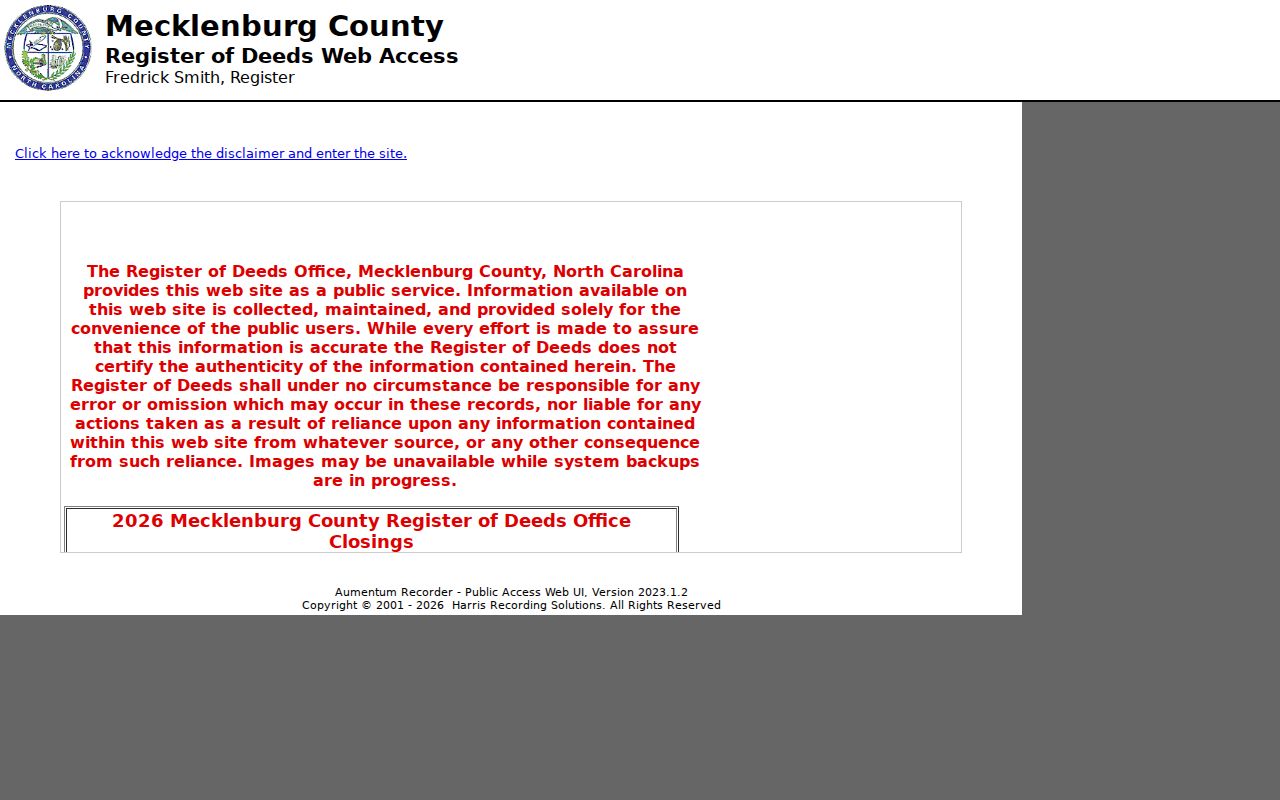
The modern index is the forward portion of the address trail and should be read with the role, date, and instrument type intact.
The historical Mecklenburg deed index and images cover 1763 through February 1990. That handoff is a search-system boundary, not proof that every property event fits neatly into one database. For onsite review, the Register of Deeds public search room is at 720 E. 4th Street, Room 103, Charlotte, with posted Monday through Friday hours of 8:30 a.m. to 4:30 p.m. and phone 704-336-2443. Copy and mail routes are available through the office.
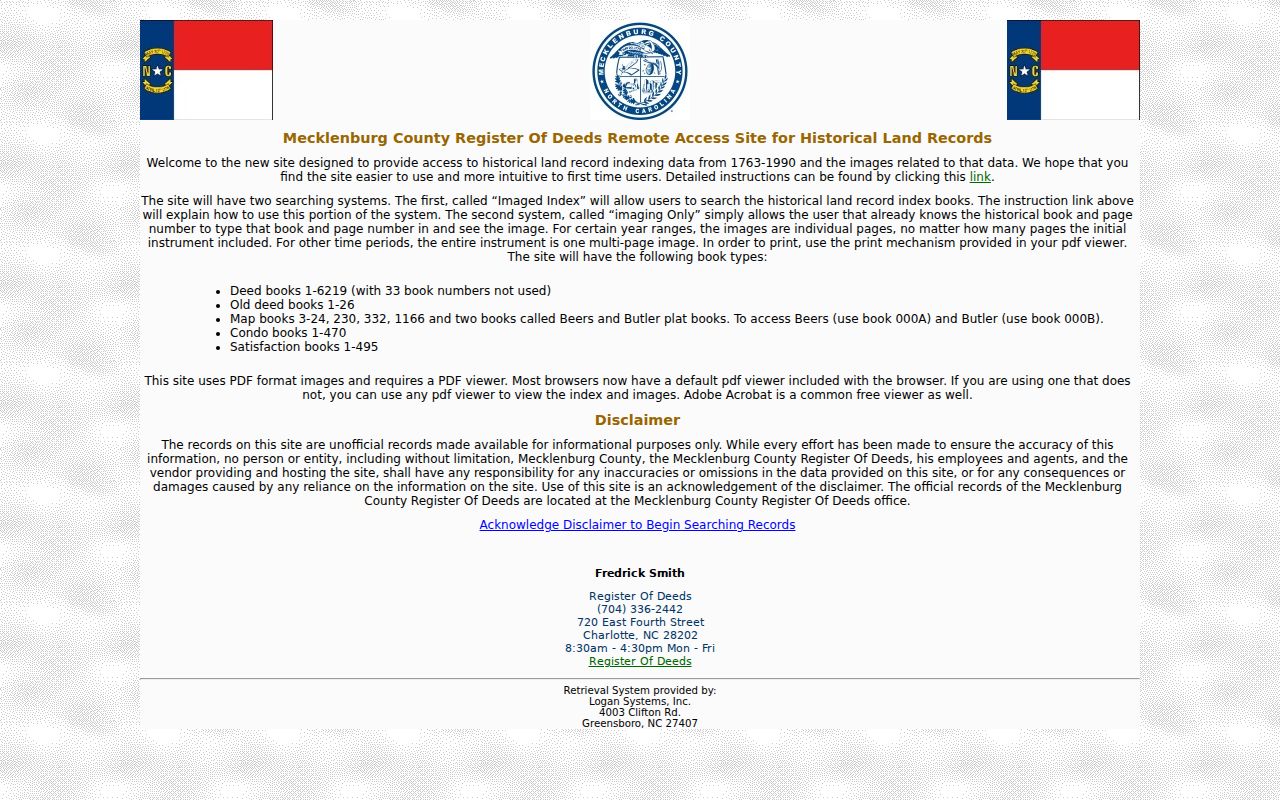
The older index supplies the earlier portion of a chain when a street address or current parcel display does not reach far enough back.
Note: A recorded owner, lender, trustee, or mailing contact is a document role and is not proof of present residence.
Charlotte Street Permit Records
Address-specific permit material can date construction, repairs, inspections, or compliance activity. Mecklenburg County’s legacy WebPermit search accepts an address or permit number and exposes online code and permit research for about six years. Older material may route through microfiche, mainframe, IVR, or a request, depending on retention and record type. Permit applicants, owners, professionals, contractors, fees, and inspection statuses are project roles. They do not prove who occupies an address.
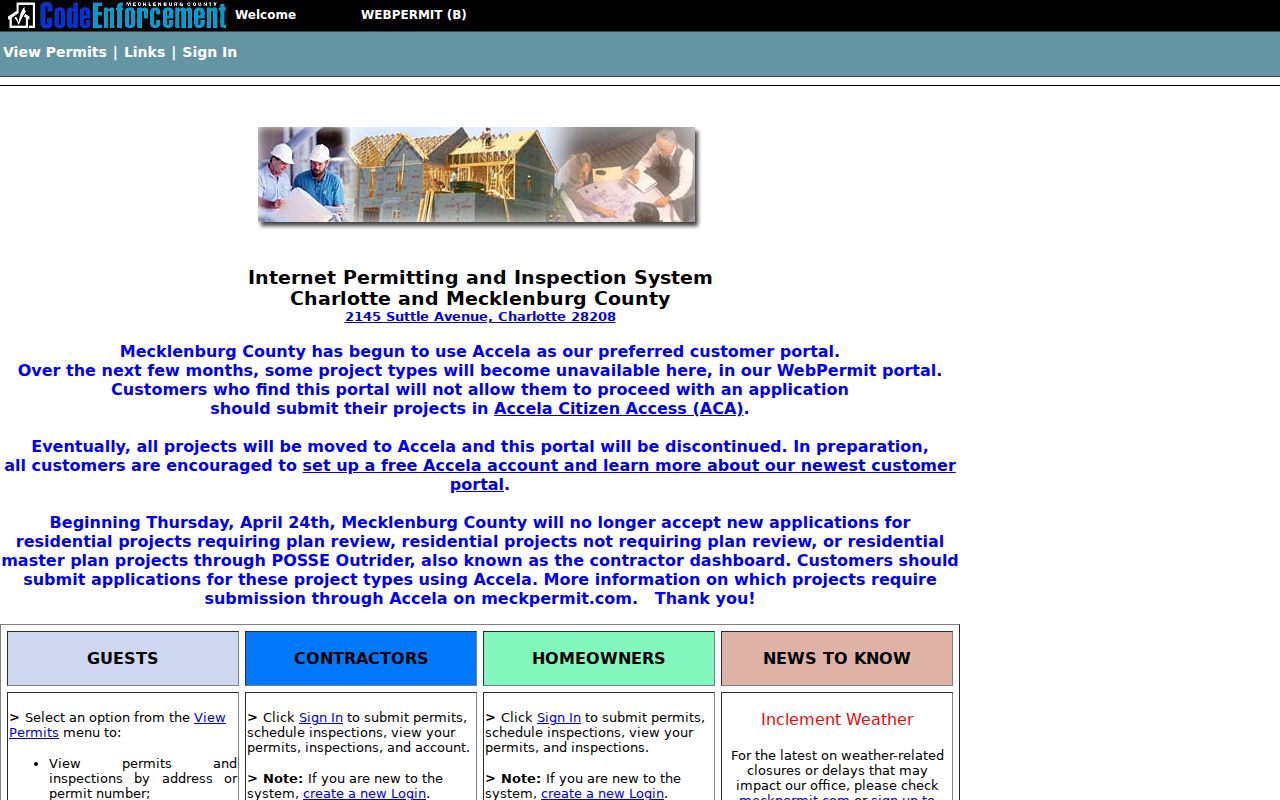
The legacy search is useful when a parcel or street number is known, but an older result gap should be treated as a retention or access question.
Within the City of Charlotte, Accela Citizen Access offers General Search fields for Project Number, Type, Project Name, Date Submit From and To, Parcel Number, Street Number From and To, Direction, Street Name, Street Type, City, State, and ZIP. Results can include applicants, owners, professionals, fees, inspections, status, and attachments. Use those labels exactly. A listed party may be connected to a project without being tied to the address as an occupant.
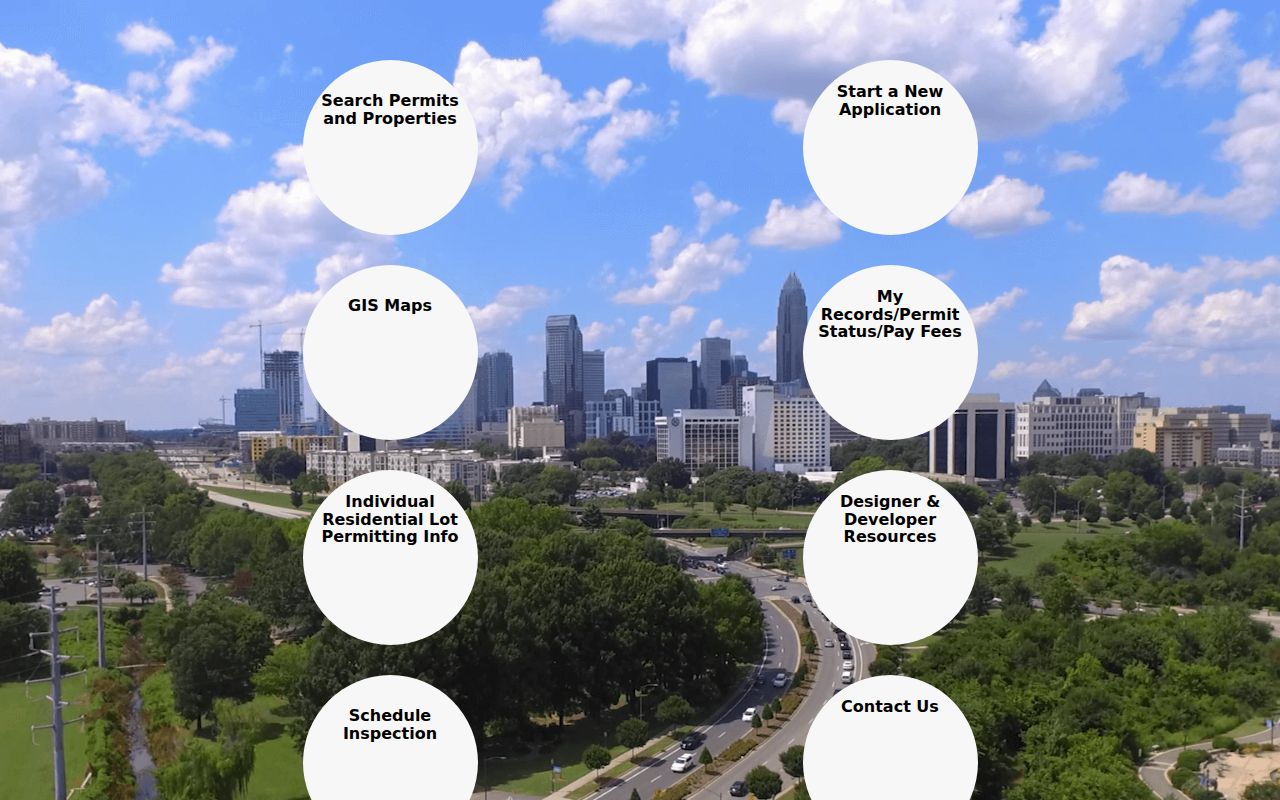
The City search supports a well-bounded project or address query and distinguishes its fields from the county legacy system.
Charlotte Street Directory History
For a changed street number or a much older address, use the Robinson-Spangler Carolina Room as a historical fallback. The Carolina Room holds city directories, maps, newspapers, yearbooks, government documents, photographs, manuscripts, and Charlotte-area town material. Its reference desk is available Monday through Friday, 9 a.m. to 5 p.m., at 704-416-0150, with appointment and email options for some work. Sanborn maps, dated directory entries, and newspapers can help bridge a past street name or number to the parcel trail.
Charlotte directories are annual snapshots. They may use initials, street abbreviations, corner descriptions, boarder notation, or terms that reflect the period. There is no verified digitized Charlotte reverse or criss-cross directory database in the official material reviewed. Use forward directories, deeds, tax and GIS records, permits, maps, and the reference desk instead of assuming an address-to-name directory exists online.
Historical work belongs to a dated chain: directory or map clue, then a parcel or legal-description match, then the appropriate recorded instrument. The related Charlotte city directory page focuses on those historical collections and their access limits.
Charlotte Street Record Coverage
Each address-keyed source contributes a different part of the Charlotte street directory trail. The PIN, legal description, and street form are the usual bridges between systems. Where an online search ends, use the custodian that holds the existing record rather than asking another office to recreate it.
| Address record | Custodian | What it can establish | Key limit |
|---|---|---|---|
| Tax and CAMA record | Mecklenburg Tax Administration | Owner, mailing line, parcel, value and billing context | Mailing line is not residence proof |
| Parcel map | POLARIS and GeoPortal | Situs, PIN, legal description, map overlays | GIS can lag recorded instruments |
| Land instrument | Register of Deeds | Transfer, lien, plat, party roles, recording context | Role does not show occupancy |
| Permit or code record | County or City custodian | Project and inspection chronology | Retention and access differ |
| Voter lookup | NC State Board of Elections | Public election-registration context for one person | Not a streetwide roster |
The NC Voter Lookup requires first and last name, with optional middle initial, birth year, county, and Registered, Removed, or Denied status choices. It can show status, districts, polling place, and other election-facing fields that vary by result. Protected addresses and identifiers must never be exposed, and a displayed address does not prove title or continuous occupancy.
Charlotte Street Record Terms
Four local record terms make an address chain easier to read. They also prevent a map, tax, and deed result from being treated as the same kind of evidence.
- Parcel or PIN
- A county land identifier that connects a mapped tract with tax and ownership records.
- Situs address
- The physical location used for the parcel, which can differ from the owner’s mailing address.
- Plat
- A recorded map that lays out lots, blocks, easements, or subdivision boundaries tied to a legal description.
- Criss-cross directory
- An address-to-name directory format. No verified digitized Charlotte version was found in the reviewed official collections.
For a difficult address, compare the recorded legal description and plat with the current parcel, then preserve the source date. A change in numbering, street name, subdivision, or ZIP can create a false mismatch.
Charlotte Street Directory Limits
North Carolina’s Public Records Act, Chapter 132, provides an access path for existing county and city records, not a requirement that staff create a new list from separate systems. Mecklenburg County directs record requests through its public-records portal, and the City provides a separate public-record request route. Request a defined record type, address or parcel, field, and date range. A city request may be anonymous, but its supplied metadata can itself become public.
Privacy limits remain important. Actual addresses and phone numbers of Address Confidentiality Program participants are protected under GS 132-1.1 and Chapter 15C. Protected voter addresses, victim and juvenile material, sealed records, and confidential false-alarm information must not be turned into a street list. Police, court, DMV, utility, and alarm records have distinct custodians and exemptions.
Lawful use. Use Charlotte address records for personal, lawful research and source verification. Do not use a street search to stalk, harass, intimidate, or harm anyone.